

Diastrophic Dysplasia
Diastrophic dysplasia, an autosomal recessive disorder related to a mutation in the DTDST gene, is characterized by micromelia, clubfoot hand deformities, multiple joint flexion contractures, and scoliosis. DNA analysis for prenatal diagnosis is possible.
Incidence: Rare.
Sonographic findings:
Fig 1, Fig 2, Fig 3, Fig 4
- Micromelia, typically severe rhizomelic-type limb shortening and bowing of all long bones but a wide spectrum of severity.
- Hand deformities with abducted positions of the thumbs or toes called hitchhiker thumbs and toes which are relatively unique for diastrophic dysplasia; 3D ultrasound may provide better details.
- Long bones are not bowed, unlike most other lethal syndromes.
- Micrognathia, facial clefts and cardiac defects are occasionally seen.
- Differential diagnoses include thanatophoric dysplasia, achondroplasia, arthrogryposis multiple congenita, atelosteosgenesis type II and pseudodiastrophic dysplasia.
- Usually diagnosable in the second trimester, but diagnosis in the late first trimester has been reported.
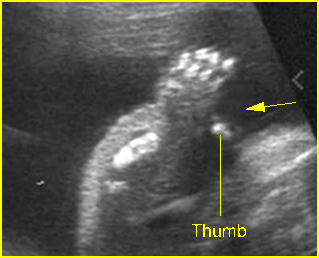
Fig 1: Hitchhiker thumbs Abnormal posture and wide separation of the thumb (arrow) in the fetus with diastrophic dysplasia (25 weeks)
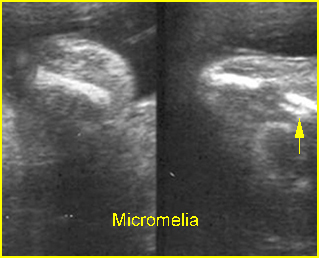
Fig 2: Shortenings of long bones Short humerus, ulna and radius but normal bone density in the fetus with diastrophic dysplasia
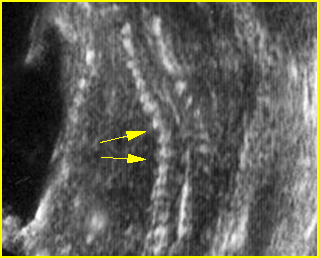
Fig 3: Scoliosis Coronal scan of the spine: scoliosis of thoracic spine in the fetus with diastrophic dysplasia
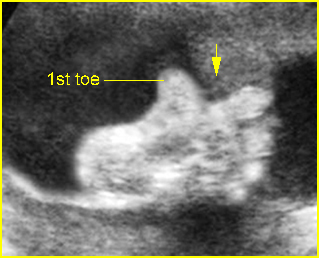
Fig 4: Hitchhiker toe Abnormal posture and wide separation of the toe (arrow) in the fetus with diastrophic dysplasia (26 weeks)
Video clips of diastrophic dysplasia
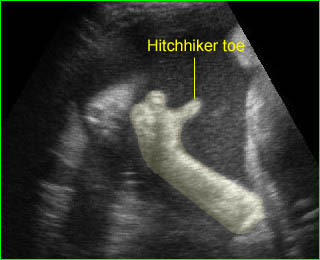
Hitchhiker toe : Persistent wide separation of the thumb and the second toe
Associations: Rare.
Management: Termination of pregnancy may be an option when diagnosed before viability. For the continuing pregnancy, diastrophic dysplasia should not alter the standard obstetric management.
Recurrence risk: Because it is an autosomal recessive disorder, the theoretical risk of recurrence is 25%.
Prognosis: Non-lethal, normal intellectual development, but a wide spectrum of morbidity.