The Department of Parasitology is responsible for teaching, research and service in parasitic diseases and insect vectors of diseases. Important parasitic diseases are malaria, amoebiasis, opportunistic parasitic infections in immunocompromised human, liver fluke and lung fluke infections, gastrointestinal helminths such as hookworm and tapeworm infections, insect vectors of diseases such as mosquitoes, flies, and black flies.
In the 2-year master’s degree program, students must register for courses which cover a lecture, laboratory practice and self-study. A 12-credit thesis is for research. However, those who have experience in working or publishing papers related to parasitology may apply for a non-course program, 36-credit thesis.
The doctoral degree program provides several options. Students who hold honorary bachelor’s degree with GPA > 3.50 may carry on research for 72-credit dissertation. Those with GPA 3.00-3.49 must take courses for a total of 24 credits followed by a 48-credit dissertation. Either option usually takes 5 years to complete.
Eligibility requirements
For students who hold master’s degree, those with parasitology knowledge may choose to take 48-credit thesis while those without knowledge must take courses for a total of 12-credit followed by a 36-credit dissertation. Either choice requires a minimum of 3 years to complete.
For persons to enroll for master’s degree program, they must hold or in process of being awarded a bachelor’s degree in medical science or other scientific disciplines.
Persons who apply for doctoral degree program must carry honorary bachelor’s degree in science from an institution comparable in standard and content to that awarded at the Chiang Mai University. For those who hold a master’s degree must be in science discipline especially health science.
International collaborations
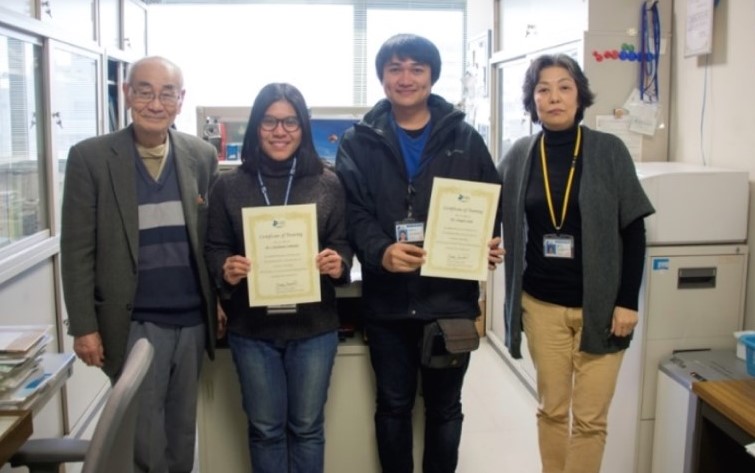
Instructors collaborate with researchers in universities and institutes abroad, e.g. Japan, Malaysia, Australia, UK, Germany, and USA . In addition, students who are awarded the Royal Golden Jubilee Ph.D. Program scholarship are entitled to do research in university abroad which their advisers have contact.
Scholarship
The Faculty of Medicine may offer scholarship to eligible students covering tuition fee and financial aid for attending conference. Several instructors in the department are awarded grant which covers student stipend from the Royal Golden Jubilee Ph.D. Program
Topics for thesis/dissertation
– Taxonomy of insect vectors: mosquitoes, flies and black flies – Microanatomy of insect vectors
– Biology and ecology of insect vectors – Molecular genetics of parasites and insect vectors – Parasitic infections in insect vectors – Forensic entomology – Insect vectors control – Insecticide resistance of insect vectors – Development of medicinal plant products for prevention and control of parasites and insect vectors